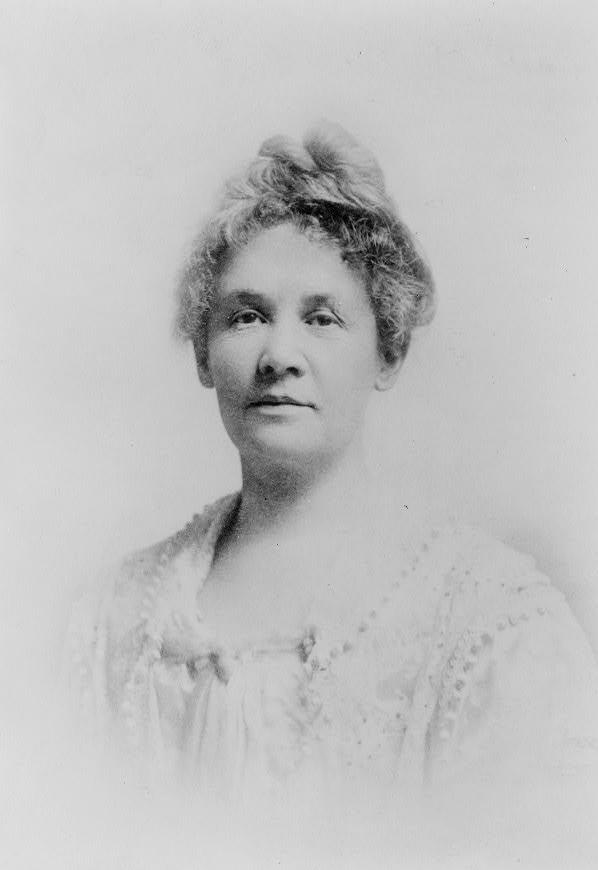
 Alice Brown (December 5, 1857 – June 21, 1948) was a prolific and versatile American author whose life spanned nearly a century, leaving an enduring imprint on late
nineteenth and early twentieth-century literature.
Alice Brown (December 5, 1857 – June 21, 1948) was a prolific and versatile American author whose life spanned nearly a century, leaving an enduring imprint on late
nineteenth and early twentieth-century literature.Partner Louise Imogen Guiney
Queer Places:
Hawes Cemetery, Exeter Rd (New Hampshire 88), Hampton Falls, NH 03844 United States
Alice Brown (December 5, 1857 – June 21, 1948) was a prolific and versatile American author whose life spanned nearly a century, leaving an enduring imprint on late
nineteenth and early twentieth-century literature.
Born on December 5, 1857, in Hampton Falls, New Hampshire, she cultivated a deep passion for writing and the arts from an early age. In 1881, she relocated to Boston, Massachusetts, a move that placed her at the vibrant center of the city's literary and artistic Renaissance. It was during this period that Brown became a prominent figure among the Visionists, an elite artistic circle that championed the philosophy of "art for art's sake" and upheld the supreme nobility of artistic production over all other commercial or social activities. Alongside Brown, this influential movement included notable figures such as Herbert Copeland, Ralph Adams Cram, photographer and publisher F. Holland Day, poet Philip Savage, and writer Louise Imogen Guiney.
Within Boston's bohemian and literary landscape, Brown shared a profound, lifelong romantic companionship with Louise Imogen Guiney. Their relationship, characterized as a classic Boston marriage, was both intellectually stimulating and deeply affectionate. F. Holland Day, who lived as Brown's neighbor on Beacon Hill, was among many contemporaries who felt a sense of jealous admiration for the tight bond the two women shared. Despite their closeness, Guiney faced unique societal hurdles; as a Catholic educated in a convent school in Providence, she could not navigate upper-class Protestant Boston society with the same ease as Brown. Anti-Catholic bigotry of the era was severe, manifesting openly when Guiney worked as a postmaster in Newton and local Protestant neighbors organized a boycott against buying stamps from her. Because her compensation depended directly on sales volume, this boycott threatened her livelihood, prompting Brown and their wider circle of friends to organize a relief campaign urging Boston residents to travel to Newton and purchase stamps from her.
Despite health challenges, Guiney carved out a literary following through her poetry and worked at the Boston Public Library while providing editorial assistance to F. Holland Day's publishing house. Eventually, growing frustrated with the limitations of her environment, Guiney relocated to England. This geographical separation did not sever her ties with Brown, who became a frequent visitor across the Atlantic. Together, the two women collaborated on a literary biography of Robert Louis Stevenson, maintaining their intellectual partnership despite the distance.
Individually, Alice Brown achieved remarkable literary success, authoring over twenty novels in addition to numerous short stories, volumes of poetry, and magazine articles that explored New England life, morality, and human psychology. Despite her public prominence as a writer and her integration into Boston's intersecting queer and straight literary circles, Brown maintained a fiercely guarded private life. Reflecting her desire for absolute privacy, she explicitly ordered that her personal papers be burned upon her death. Alice Brown passed away on June 21, 1948, leaving behind a rich legacy as a central architect of New England regionalist literature and a steadfast partner in one of Boston's most notable literary unions.
Alice Brown is buried with her family at the Hawes Cemetery in Hampton Falls, New Hampshire.
References:
Other references:
Support this project
This website is a passion project researched, developed, and funded entirely by me. If you find the content valuable and would like to help support the ongoing research and hosting costs, any contribution is deeply appreciated.
Thank you for keeping this independent resource alive!
My books on Amazon: Elisa Rolle's books